

Questions for further reflection:
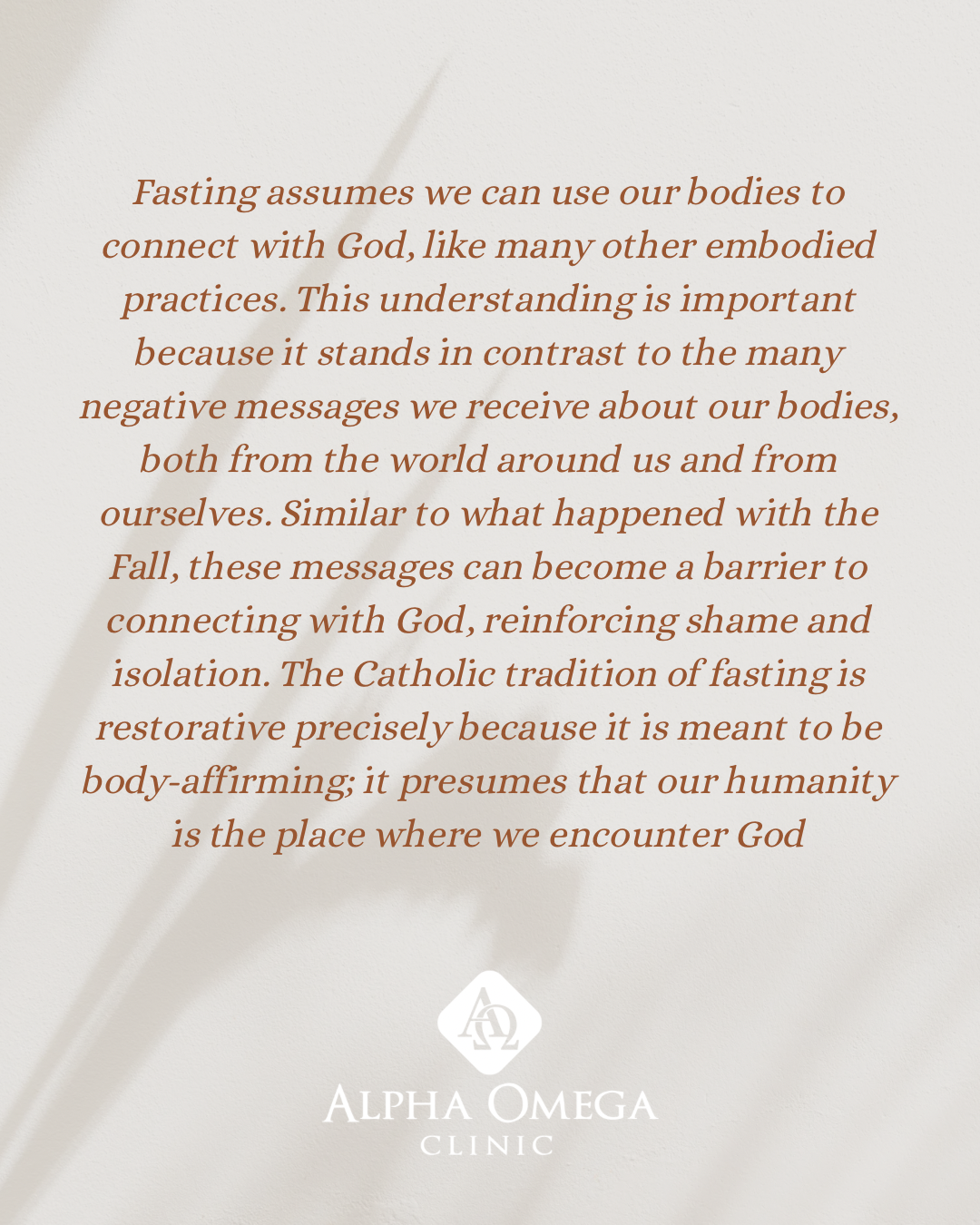
Do I experience my body as an obstacle to holiness, or as the very place where I meet God? What experiences have reinforced either belief?
What forms of self-judgment or dehumanizing inner dialogue keep me isolated from others or from God?
When I think about the Fall, where do I notice shame or hiding in my own life? How does that affect my prayer or sense of closeness with God?
If fasting is meant to be body-affirming, what would it look like for me to fast in a way that increases my dignity rather than shrinks it?
What attitudes, habits, or relational dynamics “harm the body” in my life—physically, emotionally, or spiritually?
What would it mean for me to fast from self-hatred, comparison, or harsh judgment this Lent? How would I practice that concretely?
If my humanity is the place where I encounter God, what part of my humanity feels hardest to bring into His presence?
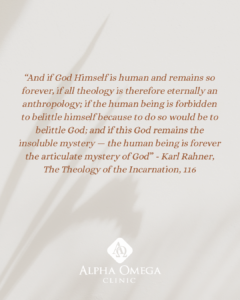
How does the reality of the Incarnation challenge the idea that my body is something to escape or dominate?
What small embodied practice (slower eating, intentional breathing, walking, sitting, silence) might help me experience Christ more fully this season?
* The information provided is for self-enrichment and not intended to replace any necessary mental health treatment.
Want to support our work? Visit aoclinic.org/donate
Want more ways to receive this content? Follow us on Instagram or Facebook or subscribe to our e-newsletter.
Warmly,
Jonathan Dixon, LMFT
Alpha Omega