

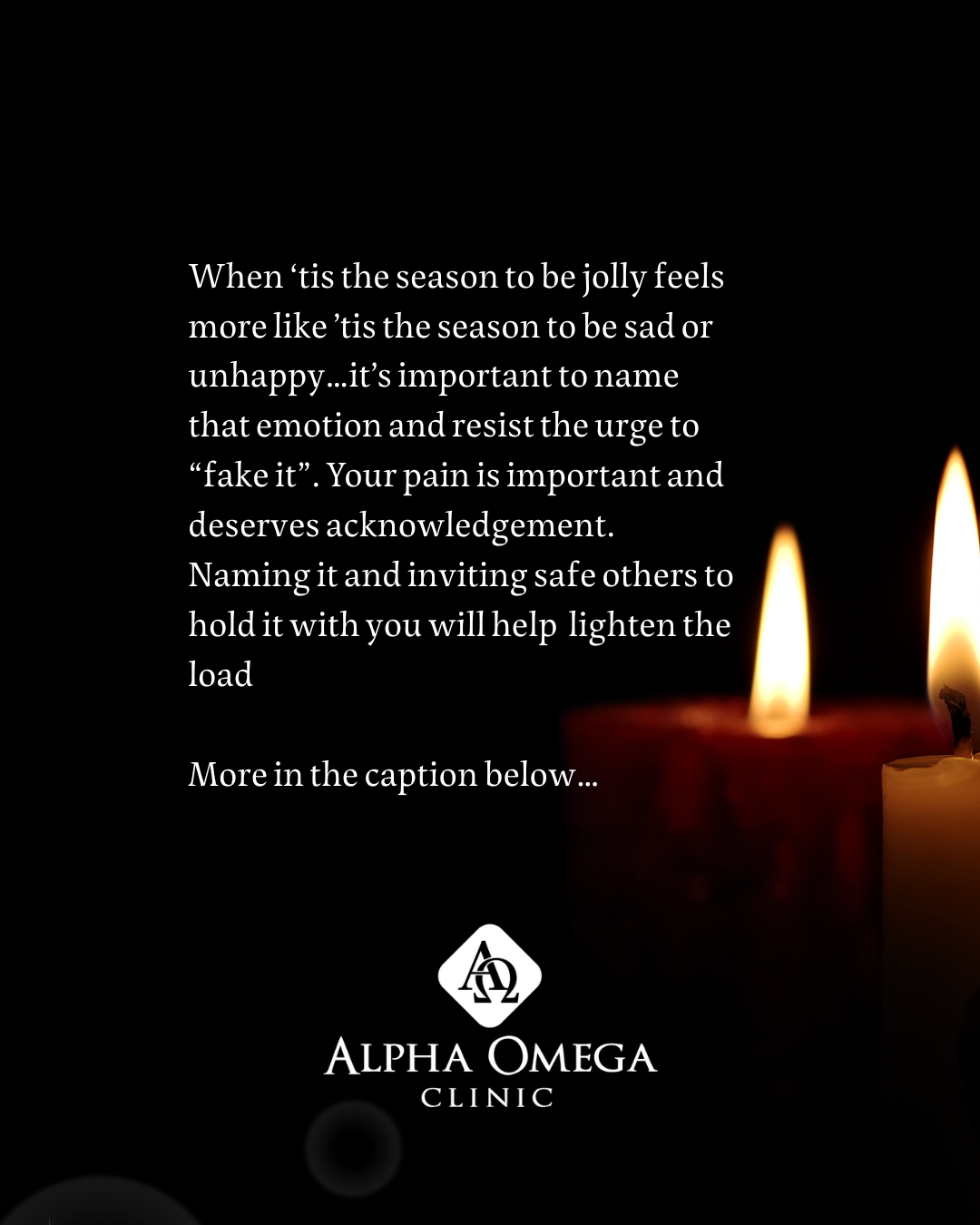
The holidays arrive wrapped in expectation: joy, togetherness, gratitude, a festive spirit. Yet for many, this season stirs grief, loneliness, anxiety, or old wounds that can echo even louder in response to the many messages that insist we should be happy at this time of year.
This actually makes perfect sense; the holidays intensify unmet attachment needs and memory networks. Pain is often triggered when we are reminded of what we don’t have or what we could have. We long for safety, belonging, and connection but when those needs were unmet in the past, or are perhaps unmet now, the nervous system responds with sadness, irritability, or withdrawal rather than cheer.
Our Catholic faith does not deny this reality. Advent does not begin in celebration, but in waiting. In darkness. In longing. Scripture tells us that Christ entered the world not in triumph, but in vulnerability—born into poverty, uncertainty, and displacement. God meets us not after our pain is resolved, but within it.
The Psalms remind us that lament is a form of prayer. To bring our sorrow before God is not a failure of faith, but an act of trust. Emotionally, naming our grief and pain allows the body and soul to integrate what has been lost or feels absent. Spiritually, it makes room for grace.
If this season feels heavy, you are not broken and you are not alone. Joy in the Christian sense is not forced happiness; it is the quiet hope that God draws near even when our hearts are tired. Sometimes the most faithful response is not to “be jolly,” but to be honest.
This Advent, may you allow yourself to wait as you are. God is not disappointed in your sadness. Emmanuel—God with us—comes precisely for those who are weary
* The information provided is for self-enrichment and not intended to replace any necessary mental health treatment.
Want to support our work? Visit aoclinic.org/donate
Want more ways to receive this content? Follow us on Instagram or Facebook or subscribe to our e-newsletter.
Warmly,
Jonathan Dixon, LMFT
Alpha Omega